



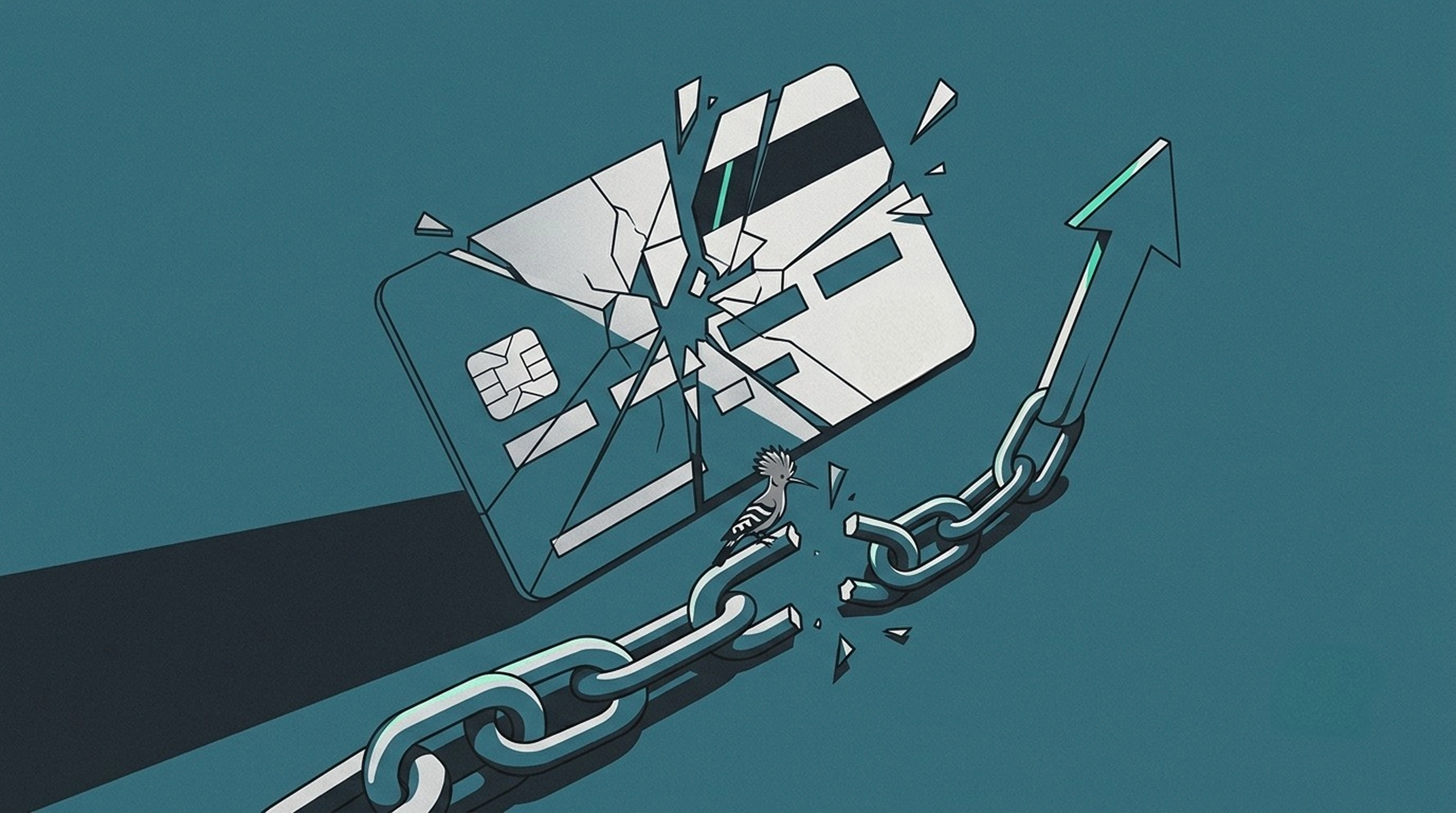
Note: Xeer does not encourage the use of interest-bearing credit cards. This tool is for people already carrying card debt, to help them build a plan to get out and limit the damage.
Xeer's strategy is built on one principle: plan once, commit fully, see it through, at the end evaluate your financial personality and position to keep using a credit card or you should be better off.
To start you just need to call your Bank to get the following info if you don’t already have it:
- Current Balance on the Card
- Monthly Interest Rate %
- Min. Payment (should also be available in your SMS from the bank)
- When the grace period ends in a given month
Input these info in Card Debt Payoff and voila! Xeer crunch the numbers and shows you the cost of paying the current minimum fixed which typically it’s something around 40%+ a year. We also have a tailored 2 advised plans for you:
Xeer's Credit Card Debt Payoff Planner calculates exactly what each of these looks like for your specific balance and income. Use it to see the difference before committing.
Reasonable Plan
A fixed amount equal to 15% of the opening balance, meaningfully above the minimum monthly commitment. It reduces the principal at a steady, defined pace and clears the card in 7 to 10 months whatever the card's terms, and holding the plan that short is what keeps the added debt to a minimum.
Intensive Plan
Pushes your monthly commitment to the maximum over just 3 months, clearing the debt aggressively with near-zero added debt, because the window is too short for new debt to build.
But these two are not the only plans you can view: you can calculate exactly what you will pay if you commit to a monthly amount you set yourself. Use it to see the difference and anticipate the consequences of each plan before settling on one.
The Strategy — Step by Step
1. Borrow to cut the principal first if possible
If you can borrow from a family member or friend
- To fully, or significantly, reduce your balance, this is the best opening move
- Less principal means less total interest accumulating across the payoff period
- Treat it as a real debt except it's without interest; honor it as one
If you thinking of joining in a Gamieyah (rotating savings circle / ROSCA):
- ✓ Your payout works like a zero-cost advance, but only if your turn falls within the first third of your planned payoff period. Use it exactly like the borrowed amount: cut the principal immediately.
- ✗ If your turn falls after the first third, don't build the plan around a future lump sum. Instead, redirect your monthly Gamieyah contribution directly toward the card payment each month. It becomes part of your payoff amount.
2. Stop using the card. Immediately.
- The card goes inactive the moment the plan starts
- No exceptions: not for emergencies, not for "just this once"
- An active card and a payoff plan cannot reconcile coexisting together
3. If you doubt your own discipline: remove the card physically
- Put it somewhere inaccessible. Destroy it if needed.
- If you used Point 1: this step is no longer optional, it's mandatory. You now carry a debt to a person or a Gamieyah on top of the card. Using the card means doubling your exposure. Eliminate that possibility entirely.
4. [with Jawhar] Commit to the plan: don't restart, only adjust your pace
- Recalculating every month is how the problem stays alive
- What you can do: increase or decrease the monthly amount
- What you should not do: start over as if last month didn't happen
5. Missed a payment? Update, don't restart
- At the start of the following month, update the remaining balance and continue from where you are
- Missing once is human. Making it a pattern is a choice.
6. After full payoff: assess honestly
- Can you use a credit card in a financially healthy way going forward?
- Or is the wiser move to not carry one at all?
- If you used Point 1 to get here: this question is already answered. Until the debt to the person or Gamieyah is fully settled, a credit card is not a responsible option: the risk of falling into debt on two fronts simultaneously is real and avoidable.
The Discipline Rules (always apply)
- Always settle your full balance before the grace period ends
- Never carry a balance month to month
- No cash advances period
Is a Credit Card Right for Your Financial Personality?
Read more
A credit card doesn't change your financial habits, it amplifies them. Before you apply, or continue using one, understanding how your financial personality interacts with debt is the most important step you can take.
 Ahmed El Zoughby
 4 min read
 Conclusion
Xeer's Credit Card Debt Payoff Planner is built around this exact strategy: enter your numbers, pick a plan that matches what you can afford, then hold it to the end. The goal isn't managing the debt, it's clearing it, then building the habits that keep it from coming back. Open the Planner now, and share it with someone who needs it.

A product expert, the co-founder, and CEO of Xeer, a personal finance management platform built on Islamic Sharia principles. His work sits where Sharia fintech meets everyday money practices. He writes in Jarida to put financial awareness within reach of every Arabic speaker.
Read also

Navigate Financial Freedom with Chess Mindset
End the cycle of spending guilt and learn how to manage your finances with a simple, stress-free plan.
 6 min read

Your Route to Financial Freedom: A Glossary of the Concepts That Get You There
Financial literacy is one of those phrases that sounds impressive and explains nothing on its own. This article maps the core concepts you need in your toolkit, from opportunity cost to emergency funds, and it is updated continuously.
5 min read

Ramadan: A Practical Reset for Your Financial Habits
Ramadan is meant to be a month of restraint, yet it has quietly become one of the heaviest spending seasons of the year. This article turns the month into a structured reset for your financial habits, from planning the food budget to giving deliberately and leaving Ramadan without new debt.
8 min read
Download the app now!
Read more through the Xeer app. Download it now and enjoy all Xeer features.
 Download the App


Read also
Beyond "BNPL": The Real Cost of Consumer Installment Finance
Consumer installment finance doesn't just affect the people using it, it reshapes spending behavior, market pricing, and economic stability at scale. This article traces the real cost of BNPL from the individual decision all the way to the broader market, and what to do with that understanding.
 Ahmed El Zoughby
8 min read
Ahmed El Zoughby
8 min read
Traditional Installments & Commercial BNPL through the lens of Islamic Finance
Installment finance in Egypt takes more than one form, and the differences between them are not in the marketing, they're in the structure. This article breaks down some of those commercial models, what each one hides, and where each one stands against the sharia compliance standards.
Ahmed El Zoughby
7 min read
Buy Now, Pay Later: How Consumer Finance Became Part of Egyptian Life
Consumer installment finance in Egypt is no longer a niche product, it is infrastructure. Understanding what's driving this growth, and what the numbers behind it actually mean, is the starting point for any informed financial decision.
Ahmed El Zoughby
3 min read