




Ramadan is a significant station for improving our condition, and an opportunity to reassess our lives across their dimensions: spiritual, family, and financial. Although fasting from food is the month's most visible feature, it has turned into a large festival of consumption. Ramadan has become a marketing season rather than a month for disciplining and training the self.
The blessed month is the best season for starting over, because it is bounded by a defined period, it has a different character from the rest of the year, and we can touch and assess the results at the end of it. So let me invite you to make Ramadan an opportunity to improve your financial habits.
Why Ramadan is a golden opportunity
The month's effect is not limited to the spiritual side. It is a reset of our whole life, and it moves us into a pattern different from what we are used to all year, as if it were a message to each of us that you are capable of change, with practical proof attached. 30 days outside what you are used to, outside your comfort zone, means the environment itself is helping you develop.
How habits shape your financial life
We are prisoners of our habits. That is not a cliché we say in passing while complaining about ourselves. What we do repeatedly, every day, is what builds our life at the large scale. And that applies to positive and negative habits alike.
Habits entering Ramadan turned it from a season of worship into a season that reinforces consumption patterns, sometimes tied to excess and waste. Which is why Ramadan matters as the first step in changing clear consumption patterns. All you need to face them is rationality and a little thought, so you are not swept along by the current. That in itself is an act of worship, and an application of the words of Allah:
Translation: "And eat and drink, but be not excessive. Indeed, He likes not those who commit excess."
﴿وَكُلُوا وَاشْرَبُوا وَلَا تُسْرِفُوا إِنَّهُ لَا يُحِبُّ الْمُسْرِفِينَ﴾
(Al-A'raf: 31)
Practical steps to improve financial habits in Ramadan
Ramadan invitations
In the blessed month, advertising campaigns start and shop offers begin. All of them have one goal: for you to spend more money across the month. So take some time to plan. Start by writing a list of your needs for the month: how much you need of the basics such as rice, sugar, oil, and other food essentials; the amount you need for meat; and for vegetables, all approximately. How many times will you host relatives during Ramadan? Set an approximate amount for each occasion.
Home preparation and Eid clothes
Will you make changes at home in preparation for Ramadan and Eid? Will you buy specific clothes for Ramadan or for Eid? Set approximate amounts for those.
Planning your Sadaqah
Planning charity may look unfamiliar to some, since we are used to giving spontaneously, deciding in the moment we encounter someone in need, or when a friend invites us to contribute to helping someone. Although Sadaqah is blessed at any time, this is the month of blessing, obedience, and multiplied reward, so planning your giving across Ramadan makes it part of your daily or weekly programme.
Planning also makes giving a conscious act rather than a reaction. You can think about the kind of Sadaqah you offer, who you offer it to, and how to improve it. It also makes it part of your budget without straining you financially.
There are many types: buying a month's essentials and giving them to a family in need, sponsoring an orphan, buying Eid clothes for a family that keeps its difficulties private, and other ideas.
Rationalizing food spending
Perhaps the feature most associated with the month is overspending on food and drink, as if this were a month for excess. Which clearly contradicts its spiritual purpose of disciplining the self through fasting. Recall the words of the Prophet, peace be upon him:
Translation: "No human fills a vessel worse than his stomach. It is sufficient for the son of Adam to eat a few morsels to keep him going. If he must do so, then let him fill one third with food, one third with drink and leave one third for air."
﴿مَا مَلأَ آدَمِيٌّ وِعَاءً شَرًّا مِنْ بَطْنٍ، بِحَسْبِ ابْنِ آدَمَ أُكُلاتٌ يُقِمْنَ صُلْبَهُ، فَإِنْ كَانَ لا مَحَالَةَ فَثُلُثٌ لِطَعَامِهِ، وَثُلُثٌ لِشَرَابِهِ، وَثُلُثٌ لِنَفَسِهِ﴾
Reported by Tirmidhi
Make that your compass for the month.
You can apply it by keeping your daily table to what your household actually needs, and by thinking about where surplus food will go, which keeps you clear of wasting a blessing. Avoid excess at gatherings.
Entertainment
Set an amount for entertainment as well, whether eating out or ordering food at home. And don't forget to set an amount for Sadaqah and for doing good.
Then total the amounts across all categories. The result is what you need for Ramadan. Is that within your means? If it exceeds the income you have allocated to Ramadan, look at the spending lines as a whole and reduce the lower-priority ones. At minimum, you should come out of Ramadan with no new debt.
Generosity without excess
The month cannot pass without family and friend gatherings around the iftar table, which is a form of maintaining kinship and social connection. The problem appears when those gatherings become an arena for competition and display.
That leaves us with tables crowded with dishes of every kind, far beyond the number of people present, most of which ends in the bin. It also puts hosts under social pressure that may exceed their financial capacity, forcing them to prepare larger quantities out of fear of criticism, sometimes pushing them into borrowing, or into declining invitations and withdrawing from contact.
You can avoid excess at these gatherings by planning ahead, limiting the guest list, and preparing sensible quantities. Set the table in a way that keeps surplus food clean, and coordinate with families or organizations to distribute food to those in need immediately after the meal.
And share your thinking about Ramadan gatherings with the people around you. You may be the reason this consumption tide connected to the blessed month starts to turn.
Finally, avoid falling into debt
The social occasions, gifts, and Eid preparations that accompany the month push some people toward debt to cover the costs, which raises the financial burden once the month ends. So hold to a balanced financial approach built on not exceeding your financial capacity.
More important still, stay current in Ramadan on any payments you owe, such as a car installment, house rent, or school fees.
You can achieve that through the advice above. Set yourself a rule: no borrowing to buy non-essentials. Remember that offers and discounts, however tempting, hold no value if you don't need the item.
If Ramadan spending has already left you carrying card debt, the Card Debt Payoff planner in Xeer gives you a single committed plan to clear it rather than a monthly recalculation.
 Conclusion
We hope you have resolved to make this Ramadan different. Remember that managing and planning does not mean deprivation, and it does not mean stinginess. It means taking hold of your financial life, and it is a realization of the spirit of the blessed month. Ramadan is an opportunity for positive change, spiritually and materially. Seize the chance to discipline the appetite for consumption, and to build independence in your financial decisions away from the consumption patterns and negative habits attached to the month. May Allah accept our good deeds and yours.
Read also

Navigate Financial Freedom with Chess Mindset
End the cycle of spending guilt and learn how to manage your finances with a simple, stress-free plan.
 6 min read

Your Route to Financial Freedom: A Glossary of the Concepts That Get You There
Financial literacy is one of those phrases that sounds impressive and explains nothing on its own. This article maps the core concepts you need in your toolkit, from opportunity cost to emergency funds, and it is updated continuously.
5 min read

Sadaqah in Ramadan Through an Investment Lens: Giving That Grows
Giving in Ramadan is treated as an act of compassion, and it is, but the way you structure it also determines whether it strains your finances or compounds with them. This article breaks down the 3 patterns of Sadaqah and how to manage each one without straining your budget.
6 min read
Download the app now!
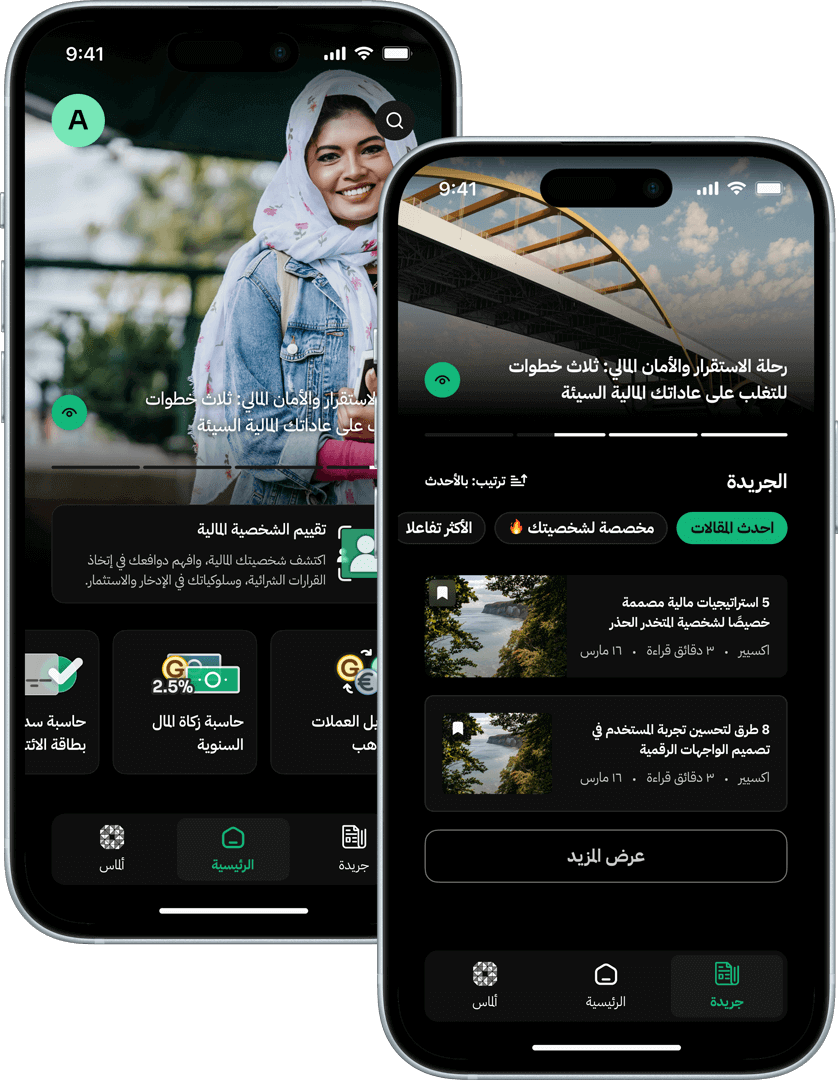
Read more through the Xeer app. Download it now and enjoy all Xeer features.
 Download the App

Read also
Beyond "BNPL": The Real Cost of Consumer Installment Finance
Consumer installment finance doesn't just affect the people using it, it reshapes spending behavior, market pricing, and economic stability at scale. This article traces the real cost of BNPL from the individual decision all the way to the broader market, and what to do with that understanding.
 Ahmed El Zoughby
8 min read
Ahmed El Zoughby
8 min read
Traditional Installments & Commercial BNPL through the lens of Islamic Finance
Installment finance in Egypt takes more than one form, and the differences between them are not in the marketing, they're in the structure. This article breaks down some of those commercial models, what each one hides, and where each one stands against the sharia compliance standards.
Ahmed El Zoughby
7 min read
Buy Now, Pay Later: How Consumer Finance Became Part of Egyptian Life
Consumer installment finance in Egypt is no longer a niche product, it is infrastructure. Understanding what's driving this growth, and what the numbers behind it actually mean, is the starting point for any informed financial decision.
Ahmed El Zoughby
3 min read